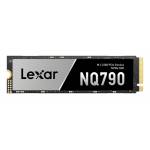
Kurzinfo: Lexar NQ790 - SSD - 2 TB - intern - M.2 2280 - PCIe 4.0 x4 (NVMe) Gruppe Festplatten Hersteller Lexar Hersteller Art. Nr. LNQ790X002T-RNNNG EAN/UPC 0843367132225 Produktbeschreibung: Lexar NQ790 - SSD - 2 TB - PCIe 4.0 x4 (NVMe) Typ Solid State Drive - intern Kapazität 2 TB Formfaktor M.2 2280 Schnittstelle PCIe 4.0 x4 (NVMe) Merkmale Host Memory Buffer (HMB), SLC-Cache, 3D NAND Technology, NVMe 1.4 Abmessungen (Breite x Tiefe x Höhe) 22 mm x 80 mm x 2.45 mm Gewicht 6 g Lokalisierung Global Ausführliche Details Allgemein Gerätetyp Solid State Drive - intern Kapazität 2 TB Formfaktor M.2 2280 Schnittstelle PCIe 4.0 x4 (NVMe) Merkmale Host Memory Buffer (HMB), SLC-Cache, 3D NAND Technology, NVMe 1.4 Breite 22 mm Tiefe 80 mm Höhe 2.45 mm Gewicht 6 g Leistung SSD-Leistung 1200 TB Interner Datendurchsatz 7000 MBps (lesen)/ 6000 MBps (Schreiben) 4 KB Random Read 800000 IOPS 4 KB Random Write 600000 IOPS Zuverlässigkeit MTBF 1,500,000 Stunden Erweiterung und Konnektivität Schnittstellen
Weee-Nr.: 54978142
The Lexar 2TB NQ790 LNQ790X002T-RNNNG PCIe M.2 NVMe PCIe 4.0 x4 SSD is a high-performance solid-state drive designed for modern PCs and workstations that support the M.2 NVMe form factor and PCIe 4.0 x4 interface. With a capacity of 2 TB, it offers ample space for operating systems, demanding applications, large game libraries and extensive media projects such as 4K video or high-resolution photography.
Thanks to the PCIe 4.0 x4 connection and the NVMe protocol, this SSD is optimized for significantly higher transfer rates and lower latencies compared to conventional SATA SSDs or hard drives. In everyday use, this translates into very fast system boot times, short loading times for programs and games, and a noticeably smoother workflow when working with large data sets. The M.2 design (plug-in module directly on the motherboard) saves space in the case, improves cable management and can contribute to a cleaner airflow.
Typical applications for this drive include gaming PCs, content-creation systems (video editing, 3D rendering, audio production), office and business computers that require fast access to databases or large document archives, and compact systems such as small form factor PCs or mini-PCs where every millimetre of space counts. Power users and professionals benefit from the high sustained performance when copying large files or working on multiple projects simultaneously.
Using an SSD like this offers several advantages over traditional hard drives: there are no moving parts, which results in higher shock resistance and generally increased reliability. In addition, SSDs usually consume less power than mechanical drives, which can help reduce overall system power consumption and heat generation. Especially in notebooks or compact systems, this can also contribute to quieter operation and potentially longer component life.
Lexar is an established manufacturer in the field of storage solutions and has been known for memory cards, USB flash drives, DRAM and SSDs for many years. The brand focuses on products for both everyday users and professional photographers, videographers and creators who rely on stable storage performance. Lexar typically subjects its storage products to extensive testing procedures to ensure compatibility and reliability with a wide range of devices and operating environments.
With regard to sustainability and environmental protection, many storage manufacturers - including Lexar - increasingly pay attention to efficient production processes and the use of energy-efficient components. While no specific sustainability programs for this exact model should be claimed without confirmed data, customers can still benefit from the inherent advantages of SSD technology compared to classic hard drives: lower power consumption in operation and no mechanical wear parts can help reduce electronic waste in the long term, as robust SSDs often require fewer replacements in demanding everyday use. By choosing a modern, energy-efficient SSD instead of outdated, power-hungry storage technology, buyers can make a small but meaningful contribution to more resource-conscious IT usage and support the general transition toward more efficient digital infrastructures.



 Storage devices
5.081
- Blanks 63- External HDD 316- External SSD 331- Internal HDD 859- Internal SSD 1.434- Memory Cards 654- USB Flash Drives 1.024- more Memory 400Tablets 1.835
Storage devices
5.081
- Blanks 63- External HDD 316- External SSD 331- Internal HDD 859- Internal SSD 1.434- Memory Cards 654- USB Flash Drives 1.024- more Memory 400Tablets 1.835